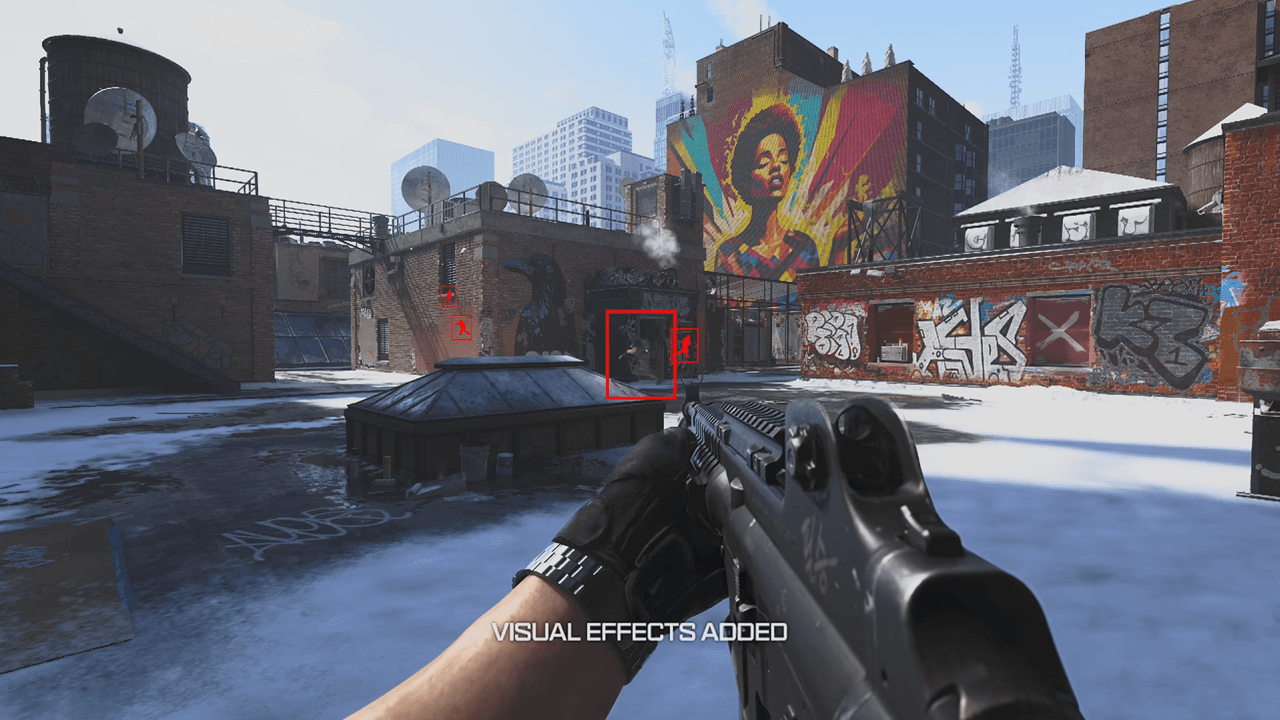
Call of Duty: Modern Warfare 4 Video Reveals Major Change That Could End Wallhacks for Good

Activision is introducing a major change in Modern Warfare 4 that creates a significant new obstacle for cheat developers and aims to eliminate wallhacks.


Justin Tomlinson

Editor-in-Chief, Mora Discover

2 sources
Call of Duty: Modern Warfare 4 Video Reveals Major Change That Could End Wallhacks for Good

A newly revealed video for Call of Duty: Modern Warfare 4 showcases a major change that could potentially end the use of wallhacks for good. Cheating has long impacted the franchise, as wallhacks have plagued Call of Duty matches for years. In Modern Warfare 4, publisher Activision has put forward a direct plan to change that dynamic, introducing counter-measures intended to disrupt illicit software creators. The incoming system is noted to create a major new obstacle for cheat developers who program and distribute these exploits.[1][2]

Wallhacks represent a specific type of cheat that allows nefarious players to see their opponents' every move through solid walls. While Call of Duty is far from the only gaming franchise to face unauthorized exploits, the persistent visibility cheat has remained a chronic issue for players over an extended period. Through the newly detailed updates planned for Modern Warfare 4, Activision is aiming to curtail the unfair advantage and dismantle the methods cheat developers rely on.[1][2]


Related stories

Google Announces Gemini 4 Flagship AI Model After Months Of Delays
Gulf Insider

Google Announces Gemini 4 Flagship AI Model After Months Of Delays

Alphabet’s Google on Wednesday announced a new top-tier artificial intelligence model to anchor its Gemini 4 generation of models in a fresh bid to catch up to rivals Anthropic and OpenAI in the AI race. The new model, “Argon”, is larger in size than Google’s previous line of advanced “Pro” models, a company spokesperson said. “It’s our most performant model yet built for complex workloads, and we see it comparable to frontier models like (OpenAI’s) Astra and (Anthropic’s) Opus on key coding and cyber benchmarks,” the spokesperson said. Google said it was providing the model to select cybersecurity partners and was participating in the Trump administration’s voluntary process for pre-release model access. It did not provide a timeline for the model’s public release. The model posted better

OpenAI safety employee quits, says 'time for trial and error is over'
Business Recorder

OpenAI safety employee quits, says 'time for trial and error is over'

A former OpenAI safety employee who recently resigned criticized the company’s approach to AI safety, arguing that a fast-paced culture focused on rapid development increases the risk of failures. Writing in “I Quit OpenAI Because Its Culture Is Broken,” published by the Atlantic on Saturday, David Robinson said AI companies, including OpenAI, were not being “nearly careful enough” and should place greater emphasis on safety expertise and research before developing more capable systems. “The time for trial and error ⁠is over,” Robinson wrote, arguing that advanced AI systems require safeguards more akin to those used in industries such as nuclear power and aviation. Robinson said OpenAI relies heavily on what it calls “iterative deployment,” releasing systems and strengthening safeguards w

Synthesized from 2 sources