Korean Earth-observation satellite successfully put into orbit
A SpaceX Falcon 9 rocket launched the CAS 500-2 satellite from California, marking a significant step in South Korea's efforts to expand its space development capabilities



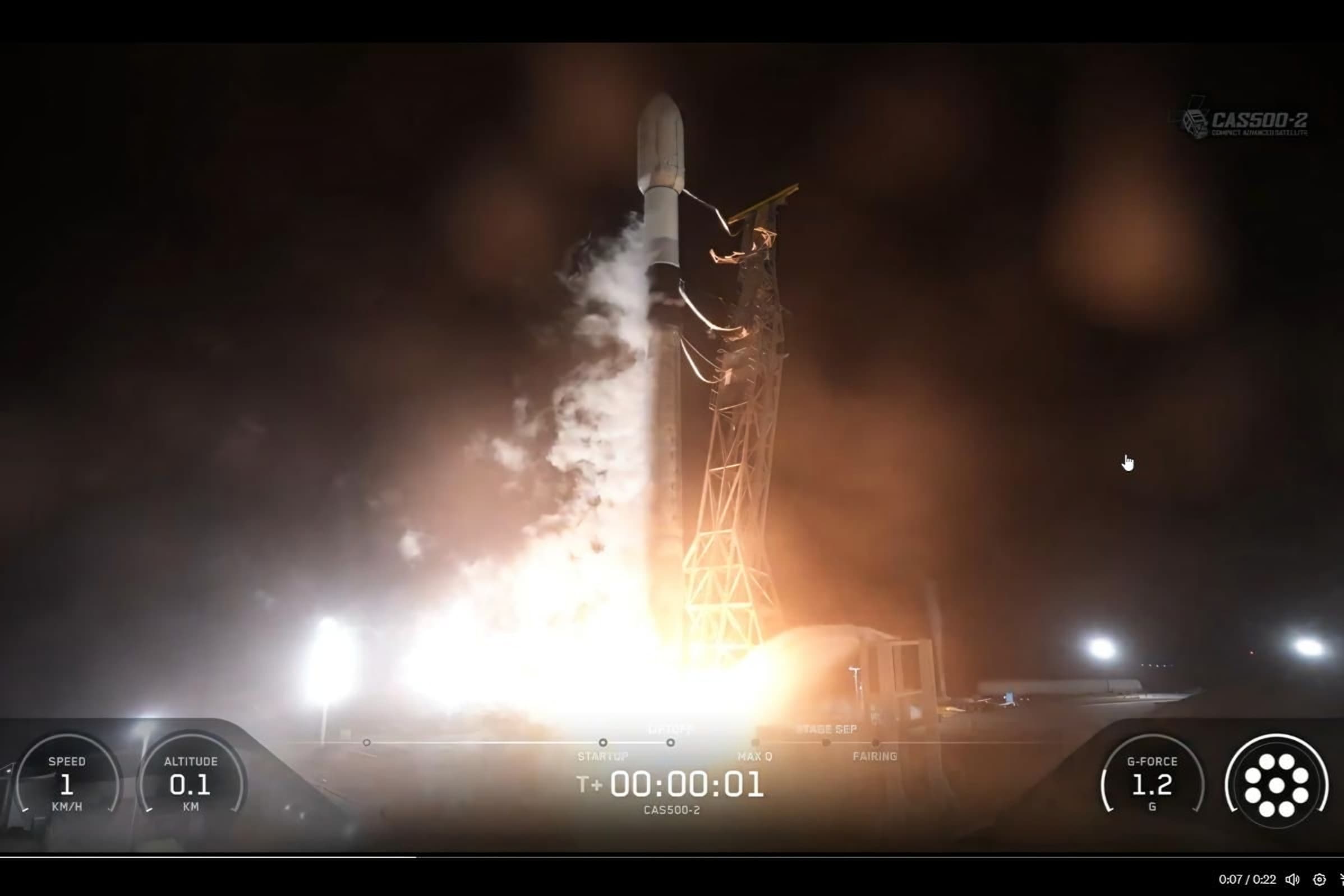
A South Korean Earth-observation satellite has successfully entered low-Earth orbit following its launch from a U.S. space base in California, authorities confirmed on Sunday. The mission is viewed as a strategic move to bolster Seoul's independent satellite development capabilities. A SpaceX Falcon 9 rocket carrying the payload lifted off at 12 a.m. Saturday, U.S. time, from the Vandenberg Space Force Base located in Santa Barbara County.[1][2]
The satellite, officially designated as the Compact Advanced Satellite (CAS) 500-2, is a next-generation midsized vessel. According to the Korea AeroSpace Administration (KASA), the satellite successfully separated from the Falcon 9 launch vehicle approximately one hour after the initial liftoff. It was subsequently confirmed to have been placed into its intended orbit, marking a successful deployment for the South Korean space agency.[1][2]
Shortly after reaching its target orbit, the CAS 500-2 achieved a critical operational milestone by making its first successful communication with a ground station. This initial contact was established with a tracking facility located in Norway approximately 15 minutes after the satellite's separation from the launch vehicle. The successful mission is expected to provide significant momentum for South Korea's aerospace sector as it continues to develop and deploy advanced midsized satellites for various observation purposes.[1][2]


